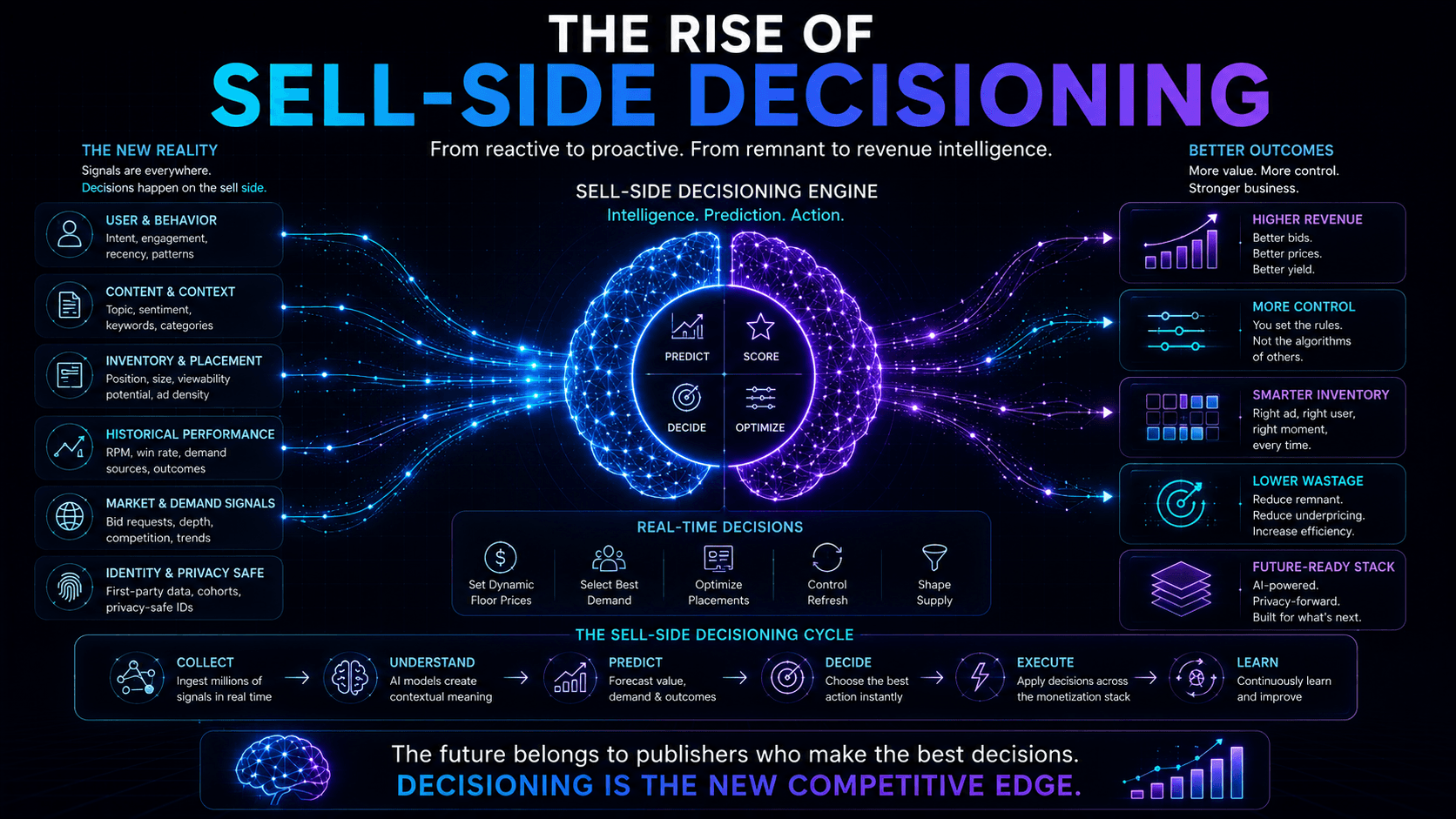
Sell-side decisioning gives publishers an intelligence layer for pricing, routing, timing, and valuing impressions before the auction.
For years, publishers relied on static reports to understand performance. Modern programmatic monetization requires a different mindset: one that treats every impression as a live market event.
The Old Way of Thinking
Traditional monetization workflows usually start after the auction ends. Publishers review CPM, fill rate, viewability, CTR, and revenue, then adjust strategy based on historical averages. This creates useful reporting, but it rarely explains why two similar impressions can produce very different outcomes.
The Signal-Based Reality
Every impression carries signals before it is sold. Reading pace, scroll behavior, device, content type, audience quality, demand competition, historical win rates, and privacy context all influence value. These signals interact with buyer budgets and campaign goals in milliseconds.
Why It Matters for Publishers
When publishers understand the forces behind value, they can move from passive reporting to active decisioning. That means smarter floors, better refresh timing, stronger placement choices, cleaner user experience, and a more accurate understanding of which inventory deserves premium treatment.
The Equalize Perspective
The future of monetization is not simply adding more demand or more ads. It is building a real-time intelligence layer that understands when an impression is valuable, why it is valuable, and how it should be exposed to the market.
Conclusion
Revenue intelligence is about making invisible market forces visible. Publishers that understand attention, demand, prediction, and dynamic valuation gain the ability to monetize with more precision and less waste.